
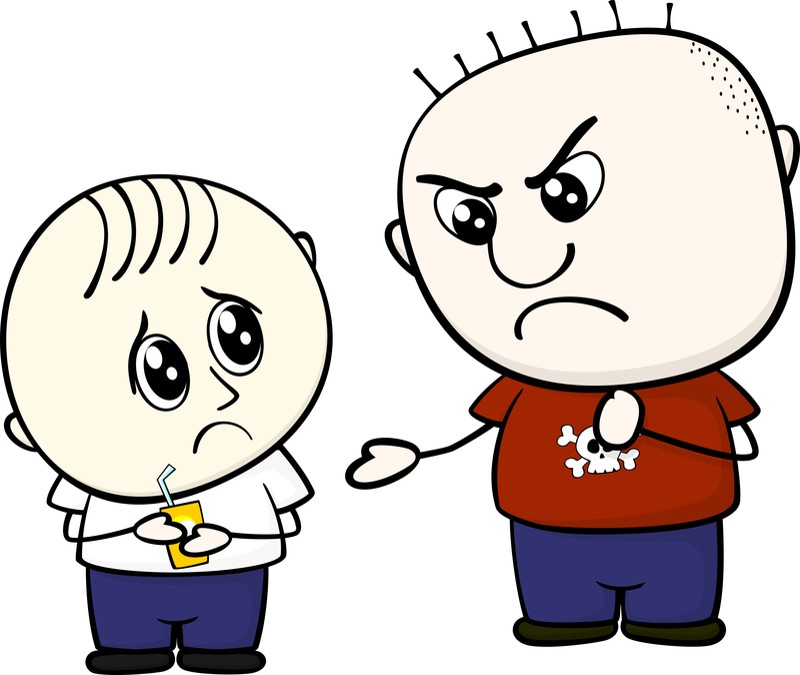
Bullying is a serious problem that leads to negative outcomes for all involved. One of the biggest myths about bullying is that it can be sorted out naturally between the kids involved. This isn’t true. The best way to resolve the problem is to work with the whole system including kids, schools, parents and the community. Read on to learn more about bullying and what you can do to help.
Bullying is a group phenomenon that occurs over time, not a single incident between a victim and a perpetrator. When bullying occurs it needs to be stopped immediately. All kids involved should be separated as information is gathered. Finally, consequences need to be implemented.
Kids who are involved in bullying often play more than one role. It’s important to understand these different roles and to think of them as behaviors that can be changed. If we label kids as bullies and victims it sends a message that bullying behavior cannot change.
All children involved in bullying need help. They tend to be vulnerable youth at risk of developing depression and anxiety. Some may get involved in criminal activity and domestic violence and child abuse in adulthood.
Kids who bully fall into two categories.
Kids who are bullied come from many different backgrounds.
Kids who witness bullying can be part of the solution.
Many kids who witness bullying want to help stop it, but they don’t know how. Therefore, bystander training has become a central part of bullying prevention programs.
One of the best ways to respond to bullying is by not giving it an audience. Instead of watching passively, leave and find an adult to help. Another tactic is to offer the person being bullied a face-saving exit. For example, “Hey, Sally, can you show me where the science lab is?”
Parents can take a preventative approach by asking their children open-ended questions on an ongoing basis. For example, what is the culture like on the bus, at lunch, before class starts? What are your thoughts about being popular? What have you noticed about how people treat one another in your grade?
Give kids space and permission to share their full perspective, including mistakes that they may have made. In order to encourage honest dialogue, it’s important to assure them that we all do things we’re not proud of.
Refrain from labeling or demonizing any one child as a bully. It’s more effective to send a universal message that bullying is a behavior that can be changed.
Next Steps
Laura Silverstein, Owner of Main Line Counseling Partners has created a short (45 min) online course, How to Prevent Bullying (Without Using the Word Bullying).